
Phil Zisman is the former Inspector General of the City of Yonkers
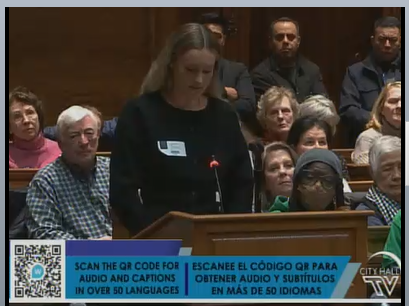
I wasn’t particularly looking forward to watching the two-hour long Yonkers City Council’s public hearing on January 28, 2025 regarding a proposed zoning change, but it turned out to be one of the best TV shows I’ve seen in long time. It told two stories: First it offered a fascinating look at how City government functions – or perhaps fails to function – and how a seemingly isolated neighborhood dispute near Sarah Lawrence College blew up into an issue with City and County wide implications. Second, it underscored how a divided Yonkers needs to come together as one united community to make sure our government protects the integrity of our neighborhoods.
The Zoning Story
Ostensibly, the subject matter concerned the existence of two single-family homes adjacent to the College, that have each been converted into eight-bedroom residences for students. The well-organized neighbors were up in arms over why City government allowed the conversion when, on its face, the project clearly violated the City’s zoning code that prohibited rooming houses in a single-family zone.
The public hearing was triggered because there is pending legislation before the City Council that would strengthen and clarify the City’s zoning laws with respect to rooming houses in single-family zones. The proposed laws would require homeowners to prove to the City’s Building Department during the permitting process that any proposed work was consistent with single-family zoning code requirements, and specifically complied with the obligation that all occupants be members of a “family” of people related to each other, and not simply a group of unrelated individuals.
Each speaker at the hearing was given three minutes to address the City Councilmembers. The neighbors, who made up the majority of the speakers, stated that they were concerned that these converted dwelling had compromised the integrity of their single-family zoned neighborhood. Moreover, there were serious questions about the City approval process. They claimed the City never provided them with an explanation as to how and why the City’s Building Department expedited the approval of the construction permits and then allowed students to move in without ever issuing a certificate of occupancy.
Several of the neighbors claimed that corruption may have been a factor because the developer Scott Sall is the politically connected son of the current Westchester County Surrogate Court Judge Brandon Sall. One of the neighbors accused the son of lying because he initially stated that he intended to move into in one of the houses.
The neighbors now seek to shut down the residences, even though they recognized that the students who currently live there are also victims of the developer’s purported unlawful actions.
The Students
Two students who lived in the houses spoke and said that they represented the 16 students living in the houses, all of whom were members of Sarah Lawrence sports teams. They stated that the students were always respectful of their neighbors and had not created any problems. They mentioned that the College only guarantees housing for freshman, and that because of increased enrollment there is a severe student housing shortage. They considered themselves lucky to have a place to live so close to campus.
The Developer
Scott Sall, a young entrepreneur who claimed decades-long family ties in Yonkers, denied any wrongdoing. He said he invested over $2 million in the properties and applied for and received all necessary work permits. He claimed that he bought one house first and had success with it without any neighbor complaints and then bought the second house. He said he made significant improvements to the houses and the landscaping, and that his applications for work permits clearly indicated that the homes were intended for shared housing. He said it would be a financial hardship for him if the City were to now change the rules retroactively.
The County Weighs In
Complicating the story, New York State law authorizes the County of Westchester Planning Board (WPB), to review pending zoning changes of municipalities within the County. The WPB issued an opinion that the proposed changes to the Yonkers zoning laws could have a negative impact on housing affordability in the City. The Board had concerns about an overly restrictive definition of what constitutes a family for the purposes of zoning; and, although only tangentially relevant to the Sarah Lawrence matter, recommended that as part of any changes to the zoning law, the City should consider authorizing Accessory Dwelling Units (ADUs) (also known as in-law apartments) throughout the city, because ADUs presented an opportunity to alleviate the ongoing City and County wide housing crises.
The County’s opinion likely influenced three current and one former member of the Westchester County Board of Legislators from Yonkers who spoke at the public hearing. In summarizing their statements, Legislator David Tubiolo clearly supported the neighbors’ efforts to enforce the current zoning restrictions; Legislator James Nolan seemed to support the neighbors but simply advised the City Council to do what was right, and Legislator Shanae Williams and former Legislator Virginia Perez opposed the legislation, echoing the County Board’s concerns that the proposed zoning changes would limit creative affordable housing solutions throughout the City.
The Community Story
I learned the stories told at the hearing incrementally – almost every speaker added another layer of detail, nuance or complexity as to what had occurred and what should be done. Near the end of the hearing, however, thanks to the remarkable presentation of Yonkers resident James Carpenter, I realized that the issues presented go much deeper than the questions of zoning and possible corruption and go to the heart of the question of who we – the people of Yonkers – are as a single community.
Mr. Carpenter, who lives on west side of town, spoke twice during the hearing, first near the beginning, and then near the end. Initially, he admitted that when he signed up to speak, he wasn’t sure about the issues, but he was concerned about government overreaching and dictating to people what they could or couldn’t do with their own homes. He was looking for a balance so that his mother, who owned a multi-family home, would have the flexibility to make renovations if she ever needed to generate income to sustain herself.
The next time he addressed the Council, however, more than an hour later, he spoke with much more conviction. He now fully understood the issues and had come to perhaps an unexpected realization. He recognized that he had common interests with the Sarah Lawrence east side neighbors, but he was uncertain about whether the neighbors felt the same way about issues on his side of town. He said he had no faith in the City Council to do the right thing, and then turned to the audience and challenged them to show up when the Council considered a zoning change that would allow the construction of two new apartment towers in his neighborhood. In response, some in the audience applauded and called out that they would be there.
Mr. Carpenter’s speach captured the essence of the east/west, black/white and rich/poor divide that has plagued our city for decades, and he implicitly recognized that only if we come together as one people can we rescue our neighborhoods from unwanted and inappropriate development projects. It was a breathtaking end to the hearing, and I wondered if anyone present had actually taken notice.
Next Steps
Now it’s up to the City Council to decide on whether to adopt the proposed legislation that would clarify the current zoning provisions. Before the Councilmembers act, however, as the City’s former Inspector General, I believe that there is a threshold matter that must be addressed: the allegations of corruption raised at the hearing need to be investigated. The Council should refer to the matter to the current Inspector General who has the authority to investigate allegations of fraud, waste, and abuse, and has the power to subpoena witnesses, take testimony under oath and issue finding of facts. The question is simple: Why weren’t the City’s existing zoning provisions applied? Was it an honest mistake or something more nefarious? If the residents of Yonkers are to have faith and confidence in our City government, we need to know.
* * * * *
I encourage all readers who are interested in Yonkers civic matters to spend the time and watch this extraordinary public hearing which took place on January 28, 2025. At the end of this paragraph there’s a link to the City Council’s Facebook page. Please note, you may have to log into Facebook to gain access to the video of the hearing, which is conducted in two parts. Part 1 begins at hour 1:31and Part 2 begins at hour 2:41. https://www.facebook.com/YonkersCCP/videos/594055916736597 You may also view the hearing on City TV, link in an earlier story.
I also want to acknowledge the excellent job that City Council President Lakisha Collins-Bellamy and Deputy City Clerk Mike Ramondelli did in conducting the hearing. They treated every speaker with respect and made sure that every person who wished to speak was given the opportunity.

