

The Winter Olympics start this week, and in events like figure skating, judges determine the winners. They don’t compete, but they ensure the competition is fair, balanced, and accountable.
Now imagine those judges stepping away before the skating even begins.
That is essentially what the Yonkers City Council just did.
By voting to rezone the former Domino Sugar property before any redevelopment proposal was submitted, the Council removed itself from meaningful oversight of what may be the most consequential land-use decision Yonkers will face for a generation—leaving future decisions largely in the hands of the mayor’s administration
Until the Council explains why surrendering its authority was preferable to exercising it, skepticism about this capitulation is not only reasonable—it is warranted.
What the Council Did
By a unanimous 7–0 vote, the City Council rezoned the Domino Sugar site from industrial to D-MX, a downtown mixed-use classification allowing residential buildings up to 150 feet high. The decision was made without a development proposal, without a project-specific environmental review, and without meaningful community engagement.
With that vote, the Council voluntarily surrendered its future authority over what is likely the most consequential redevelopment project in the City. Going forward, land-use decisions for the site will be driven largely by the mayor’s administration and reviewed by the Planning Board, with no formal role for the City Council.
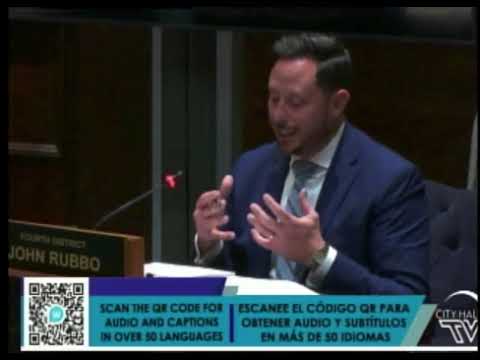
There was almost no discussion about why Council Members chose to remove themselves from the process. Before the vote, Council Majority Leader John Rubbo was the only Council member who spoke (video here). He described the redevelopment of the Domino Sugar site as a once-in-a-lifetime opportunity and said the Council wanted to send a clear message that industrial uses are no longer acceptable because the City needs to address its housing crisis. He maintained that the Council would remain involved by working with Mayor Spano and reviewing special use permits, if required.
Rubbo also acknowledged that developers have, in the past, attempted to bypass Council oversight by seeking area and use variances from the Zoning Board of Appeals (ZBA). It seems that he was referring to the ZBA’s 2025 approval of two 32-story residential towers on Woodworth Avenue—located in a “Commercial” zone. In that case, the developer didn’t need to ask the Council for a zone change, and the community never had an opportunity to be heard.
I don’t think that our Council should give up its power to guide the Domino project or any other major development initiative. A couple of weeks ago I wrote a column urging the Council not to surrender its leverage.
I felt strongly enough about the issue that I went to the Council meeting and stepped beyond my usual journalistic role to speak at the beginning of the meeting (video here). My eloquence, however, failed to sway the Council.
As I later listened to Rubbo articulate his position, it made little sense. Why would the Council relinquish its power over a generational land-use decision simply to make a symbolic statement about the need for housing? Why would they give up their authority to ensure the redevelopment includes an appropriate mix of affordable and market-rate housing? And if recent experience demonstrates problems with projects that moved forward without Council involvement, wouldn’t that argue for more Council oversight, not less?
The Impact of the Council’s Decision
The City Council loses leverage to meaningfully represent its constituents, future developers gain greater control over what will ultimately be built, and the property owner is enriched.
By rezoning the site before seeing a redevelopment proposal, the Council permanently gave up its ability to reject or meaningfully reshape future projects at the Domino site. Beyond the diminished role of the Council itself, there are three other significant consequences of this decision.
First, all development proposals for the site will now be submitted to the Planning Board for site-plan review. The Planning Board, however, does not have the authority to reject a proposal outright, as the Council once could if the zoning had not been changed. Its role is limited to ensuring compliance with the new D-MX zoning. However, the most important decisions regarding height, density, and scale are largely left to the developer. Thousands of units of market-rate housing can be built as of right, with only a 10% affordability requirement.
Second, surrounding neighborhoods and concerned residents throughout the City have lost the opportunity to have the City Council represent their viewpoints and interests. Public participation will be more difficult, and as the Woodworth Avenue Twin Towers approval demonstrates, there is a real risk that community input will be marginalized.
Third, the rezoning significantly increases the value of the Domino Sugar site by granting development rights independent of future City approvals. Domino Sugar can now sell the property at a far higher price than would have been possible without the zoning change. In the Twin Towers case, it was reported that the owner flipped the property for a multi-million dollar profit shortly after the approvals were issued.
A Question That Still Hasn’t Been Answered
What remains unexplained is why the City Council chose to step aside.
If the goal was truly to maximize public benefit the Council had every reason to retain its leverage until a concrete proposal was on the table. Instead, it chose to give that leverage away in advance, without conditions and without guarantees.
That decision raises an uncomfortable but necessary question:
Was this about addressing the City’s housing needs—or about clearing the path for private interests by removing political obstacles very early in the process?

