
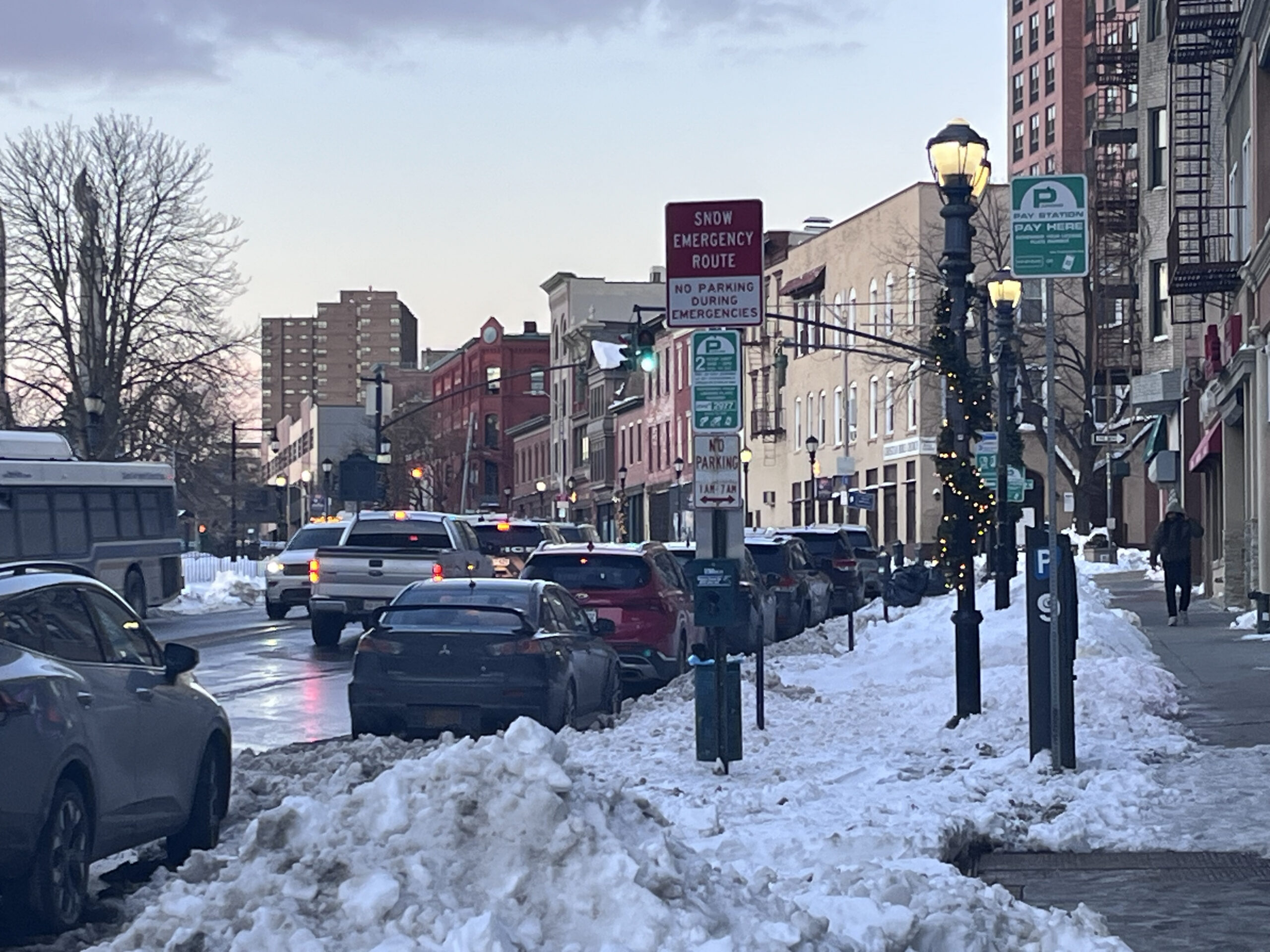
Yonkers has had a winter to remember—and it’s not over yet. Since late January, we have been buried, dug out, and buried again. The relentless string of storms has tested the patience of most of the city’s 211,000 residents and the limits of its Department of Public Works. First came Winter Storm Fern on Jan. 25, which dropped about a foot of snow and then froze solid in temperatures that bottomed out at 11°F. Then came the Blizzard of 2026, on Feb. 22–23, a bomb cyclone that buried the city under 12 to 16 inches of heavy, wet snow with whiteout conditions—the first official blizzard warning for the metro area since March 2017. By Wednesday morning, a clipper system was adding another inch or two on top of whatever was left from the weekend. And yet another storm was already fueling excited chatter in meteorological circles.
Roughly 40 inches of snow for the season so far, and two central questions: how did the city do, and did it learn anything from the first storm before the second one hit?
The answer, like most things in Yonkers, depends on where you live.
Two Storms, One Pattern
After January’s storm, the main roads cleared within a day or two. Broadway, Yonkers Ave., McLean Ave.—all drivable. But Yonkers has 450 dead-end streets, and by DPW Commissioner Thomas Meier’s own account, they are the last priority. Warburton Ave., a designated snow emergency route, didn’t begin to be cleared until Jan. 30—five days after the storm. The DPW brought in outside contractors. Residents on Nextdoor posted furiously: 102 storm-related posts in the days after Fern, full of complaints about unplowed side streets, driveway-blocking plow piles, and $65 parking tickets issued during the snow emergency.
When the February blizzard arrived, the city’s preparations were more visible. Mayor Spano declared a state of emergency, activated snow routes before midnight, opened a dozen free parking lots, scheduled three 12-hour DPW shifts, and held a press conference. The salt barn was full, and all trucks were operational. On paper, Yonkers was ready.
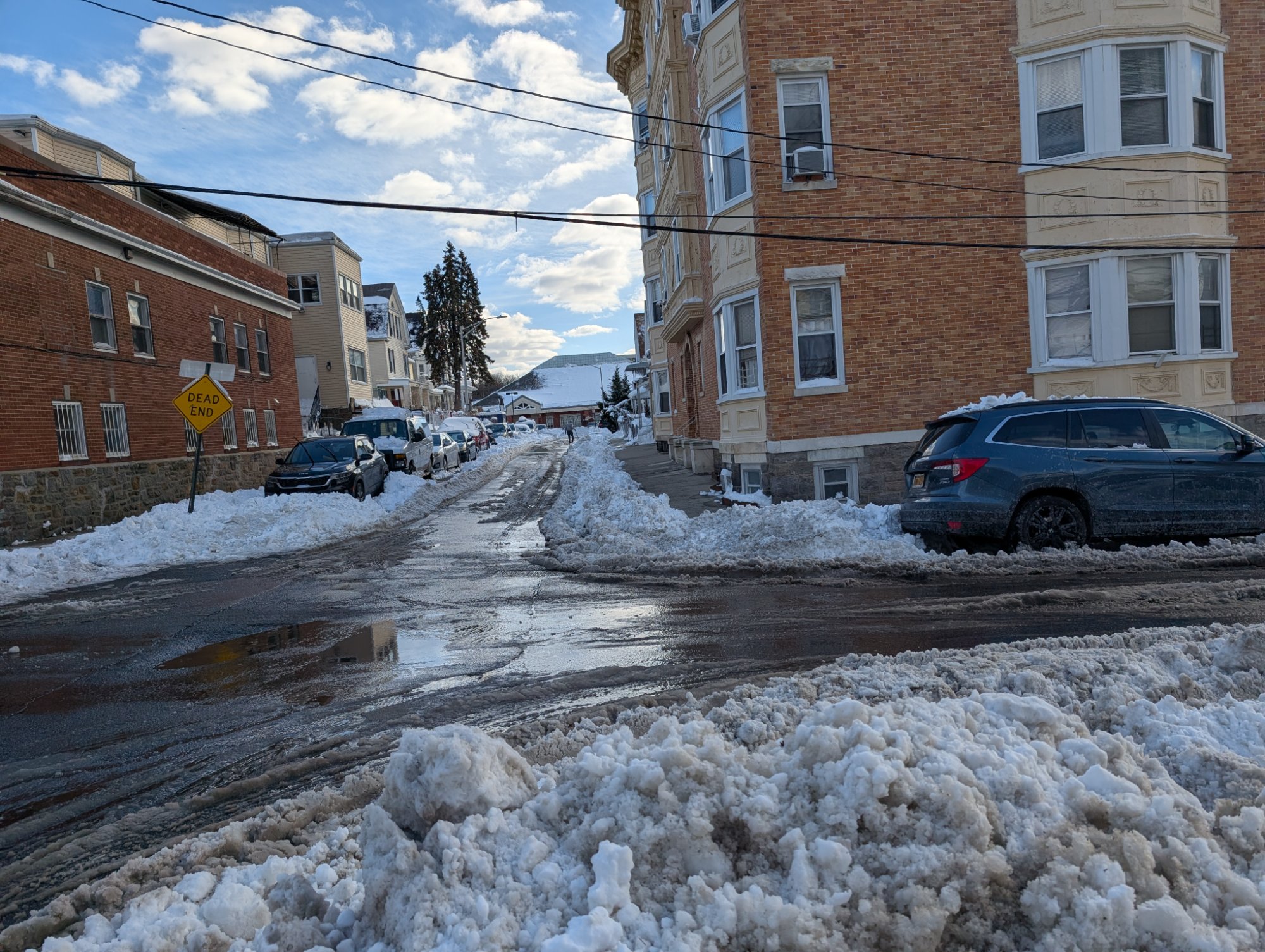
On the ground, the familiar pattern repeated. Main roads cleared. Side streets and dead ends waited. Desiree Frias in the Palmer–Mile Square area posted a photo of buried cars on Hillside Ave. Monday evening, the street wasn’t plowed until early Tuesday morning, roughly 18 hours after the heaviest snow stopped. Mae C. posted at 6:23 p.m. Monday that Devoe Ave. near Midland Terrace hadn’t seen a single plow. One resident near St. John’s Hospital reported plows early Monday, but none since. Yonkers public schools were closed Monday, Tuesday, and Wednesday—three straight days, with districts across the region running low on emergency closing days built into their calendars.
What Officials Said
Commissioner Meier spoke with the Yonkers Ledger on Feb. 20, two days before the blizzard. He explained that January’s extreme cold—six to nine degrees—made the dry, powdery snow nearly impossible to manage. It wouldn’t melt when pushed to the curb. He said residents didn’t understand why streets still looked white after plowing:
“People had the perception that, oh, my street is still white, it’s not black, so we need a plow to come down here,” Meier said. “It’s not that we’re not doing our job. This is how we’re fighting that particular storm.”
He acknowledged that communications and parking enforcement needed improvement, calling enforcement a “lesson learned.” He pushed back on the idea that the city needed to spend more, saying officials shouldn’t overreact to a single storm event.
At the press conference hours before the blizzard, Mayor Spano was asked by Yonkers Voice journalist Ru Ros if the city would do anything differently given January’s criticism. Spano’s answer: “Overall, I think we get high marks for the challenges that our men face out there.” He did not name a single change. When Ros followed up about parents not getting enough notice of school closings, Spano said, “We’ll be mindful of that.”
What Residents Saw
On Nextdoor, many of the same names that appeared in January showed up again. Maria Rose R. on Saw Mill River Road, who questioned the DPW’s shift timing before the blizzard, posted Monday evening that no city plows had reached her area—though county plows had been running along the Parkway. She attributed the absence to crew exhaustion, the same concern she’d raised two days earlier. Dan Carver in Ludlow Park, who appeared in three January ticket threads, commented on a councilmember’s official post that once again, no one had moved cars from emergency routes and no tickets or tows had followed—despite the city’s explicit warnings.
Meanwhile, a private snow removal market was thriving on social media. Residents posted looking for help with driveways and sidewalks; contractors and teenagers posted offering their services. George Pires in Bryn Mawr listed his rates: $100 for walkways, $150 and up for driveways. Lourdes Olivo, 62, in Nepera Park, posted that she couldn’t dig herself out. These are costs that don’t appear in any city budget.
A Different Approach Next Door
Across Yonkers’ southern border, New York City faced the same blizzard and took a different approach. Mayor Zohran Mamdani deployed roughly 1,400 emergency shovelers at $30 an hour and sent them out while snow was still falling—something city sanitation officials said had never been done before. Overnight, crews cleared more than 1,600 crosswalks, 419 fire hydrants, and nearly 900 bus stops. Many of the city’s wealthiest property owners were also reminded that sidewalk clearing is their legal responsibility—and that the nearly 4,000 violations issued after January’s storm were just the start. The sanitation department created a geotagged database to track which locations had been cleared. Yonkers posted its own call for emergency snow shovelers on Feb. 25 at $25 an hour—three days after the blizzard began—but applications were closed by the next day, and the Yonkers Ledger was unable to confirm whether any were deployed. That’s not necessarily a fair comparison—NYC’s budget dwarfs Yonkers’—but the contrast in timing and scale speaks for itself.
Both Things Are True
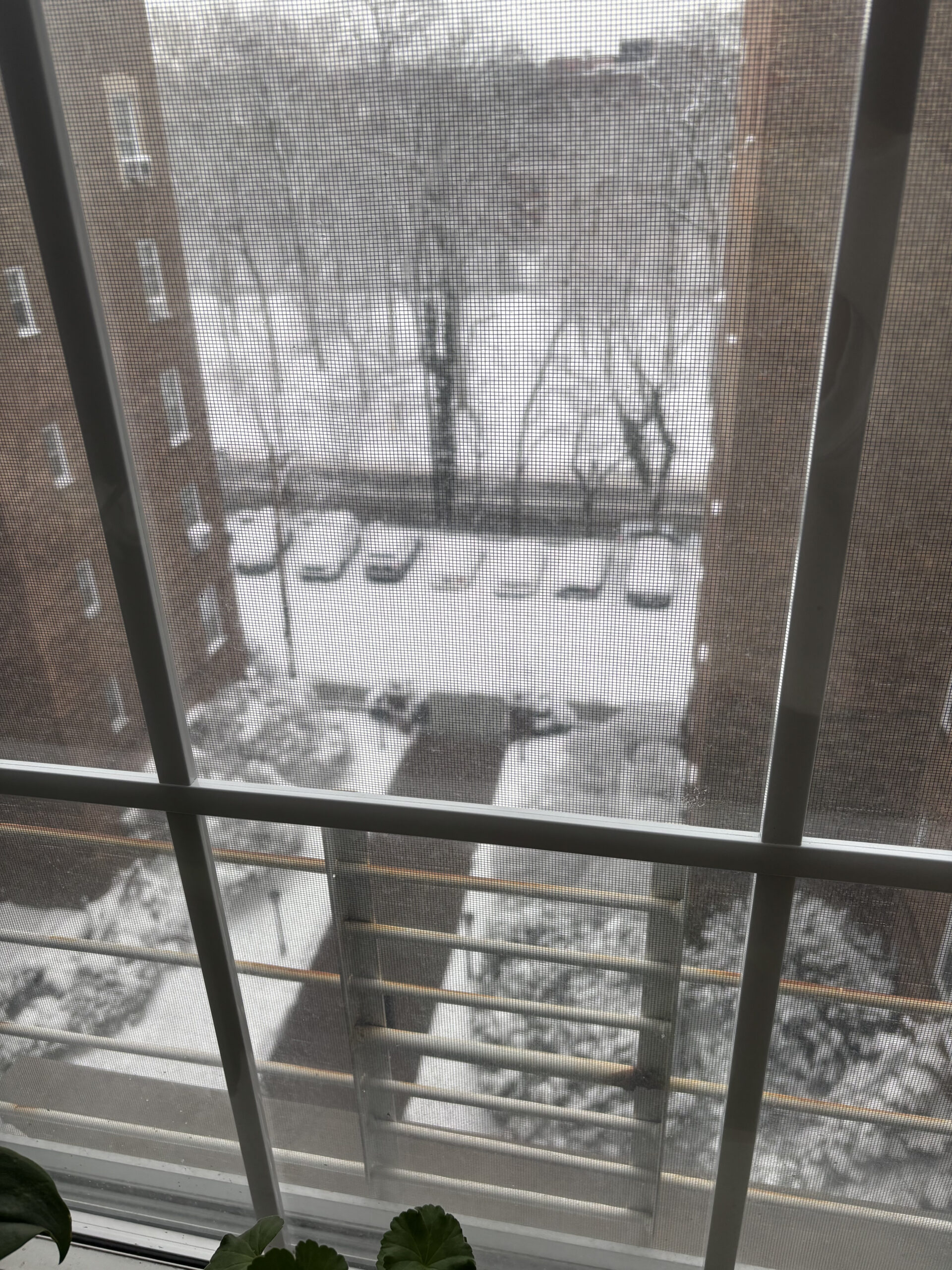
Ledger contributor Phil Zisman, who lives on a dead-end street, photographed his unplowed street at 9 a.m. Wednesday—three days after the blizzard—with his car trapped and fresh clipper snow falling on top. By 1:30 that afternoon, the plows came, and in his words, “they did an excellent job.” Three days of nothing, then excellent work. That is not a contradiction. It’s how snow removal works in a city with 450 dead ends, steep hills, and a fleet that can only be in so many places at once.
Another resident, also on Wednesday, walked the streets of Southwest Yonkers and noted several unplowed, icy side streets. The same resident noted that the sidewalks along Riverdale Ave. were not shoveled, and that the crosswalks on Ludlow and Riverdale were blocked by snow.
The city is not failing entirely. It is not succeeding entirely. How you experience the winter depends on your street address. The people on the main roads think things are fine. The people on the dead ends feel forgotten. Both are right, and both are Yonkers.
Spring will come. The snow will melt. And then, if past seasons are any guide, the conversation will shift to what the snow left behind: the potholes.

